Unit mismatch
Meter vs piece wrecks stock faster than a wrong rate.
Textile
Bill than, garments, or fabric with HSN and GST. Stock and (on SMB) barcode POS. Not a mill production system.
HSN
Fabric and apparel on the item — confirm slabs with your CA
Units
Meter, than, or piece — keep purchase and sales in the same unit
POS
Showroom on SMB Retail POS
What it is
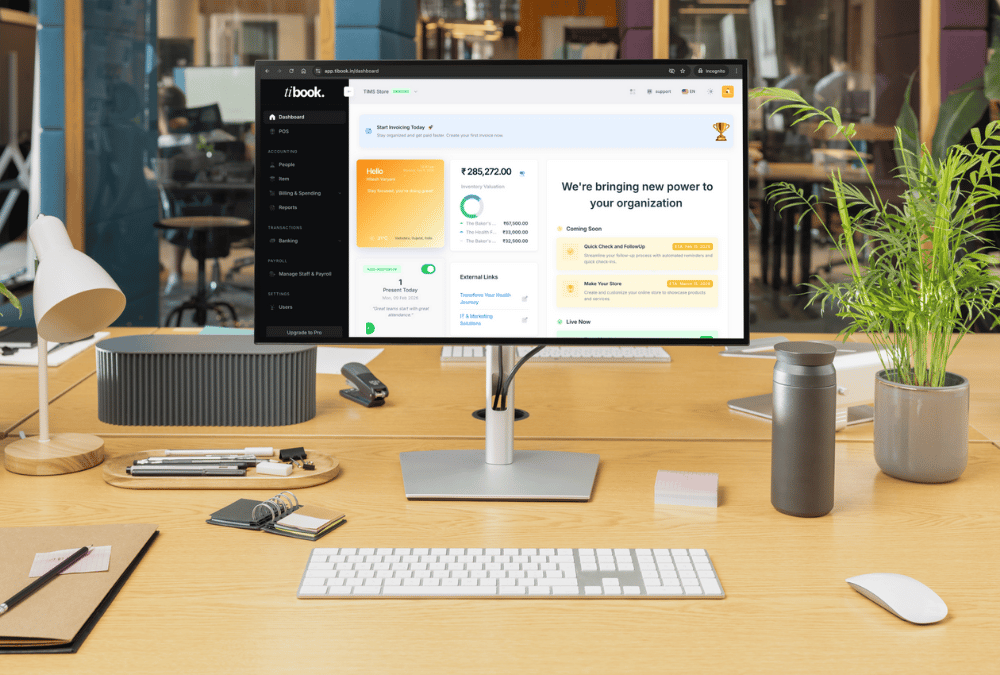
Textile billing is GST invoices with the right HSN, lots that may be than or pieces, and distributors who want a delivery challan. TiBook items, tax groups, godowns, and delivery notes cover that. We do not run a loom or a cutting ticket.
Retail garment shops use Retail POS on SMB. Wholesalers use invoices plus challans. E-way numbers are stored, not generated.
No weaving/planning module. No e-way generation.
Why it matters
Meter vs piece wrecks stock faster than a wrong rate.
Not a simple sale. Ask your CA. Challan + invoice discipline.
Wholesale invoices vs barcode POS. Same company, different screens.
Portal. We store the number.
How to
Meter, than, or piece. Purchases and sales in the same unit.
Confirm current GST slabs after rate changes.
Long invoices, challans, outstanding.
SMB. Barcodes if you tag garments.
Enable batching on those SKUs.
Guides: Units · Retail · Manufacturing
Product
Fabric and apparel HSN on the item. Rate from the tax group.
Pieces, meters, or than as the unit you actually sell. Batches if the dye lot matters.
Retail POS for the showroom. Invoices and challans for the bazaar. Same company books.
No weaving/planning module.
Unit discipline
The software should not force only pieces.
No fake mill ERP
We are billing and stock.
| Need | Mill ERP | TiBook |
|---|---|---|
| Loom planning | Yes. | No. |
| GST invoice | Module. | Core. |
| Showroom POS | Maybe. | Retail POS on SMB. |
Pricing
Start on Startup. Add SMB for POS, payroll, and ledgers. Recurring is Enterprise.
Startup
₹0
GST invoices, quotations, delivery notes, expenses, payments, basic inventory, P&L, daybook, outstanding. No credit card.
SMB
₹199/mo
Retail and Restaurant POS, payroll, extra users, and the accounting app (ledgers, journals, trial balance).
Enterprise
₹399/mo
Everything on SMB plus automated recurring invoices.
Full comparison on pricing.
Cloth merchants, garment retailers, and small traders. Not composite mills.
No weaving/planning module. No e-way generation. Not composite mills.
Startup is free. We are not a weaving mill ERP.